Communication Skills Course
Understand different ways of communicating more effectively.

- Maximum 8 Delegates
- Two Trainers per Course
- Money Back Guarantee
I really enjoyed the course. The venue and surroundings are great, so much better than a dingy ex-council building in Holborn like the norm. Maria and Paul did a fab job delivering useful and engaging content.

One-to-One Skills Training
If you would prefer One-to-One Communication Skills Training, we offer a 2-hour online Zoom call format for yourself or your colleagues. Please contact us to discuss your requirements.
These courses help you with
Elements of Communication
Body Language and Non-Verbal Cues
Communicating Remotely
Communicating Harmoniously
Practising Effective Communication
Building Your Toolkit
The 2-Day course allows for more practice and personalised time with the trainers.
Talk To Us About These Courses
- Call us
- +44 (0)20 7226 1877

Book this Communication Skills Course
This course is only available as one-to-one skills training.
Please contact us to discuss further options.
If you want to book 4 or more people on to a single course, please contact us:
- Call +44(0)20 7226 1877
- Email enquiries@impactfactory.com
Location
London Training Rooms,Suite 121
Business Design Centre,
52 Upper Street,
London, N1 0QH
Running time
{{courses[0].StartTime | formatTime}} - {{courses[0].EndTime | formatTime}}
Format
This course is available in Face-to-Face, Hybrid and Remote formats unless otherwise stated.
This course is available in Hybrid format only.
This course is available in Face-to-Face format only.
This is a Hybrid Course
All of our Hybrid courses can be attended either in-person or remotely. Your choice!
This stunning new ‘Hybrid’ technology makes Remote Learning feel like being there with everyone else in a supportive community!
Ideal for International Customers
Our Hybrid courses are the ideal choice for international customers who would like the quality of an intimate meeting and the convenience of remote learning.


One Day Open Course
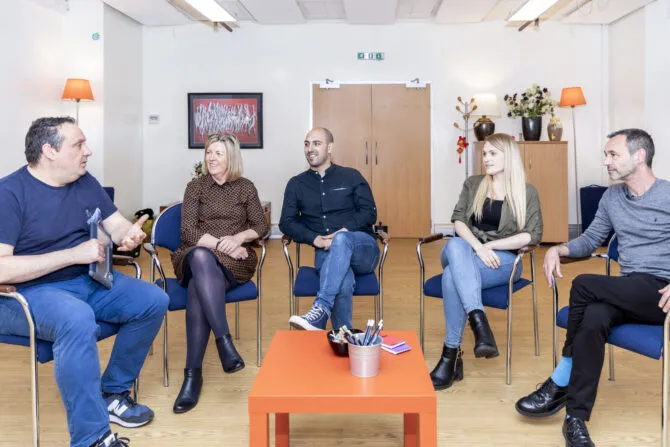
This communication skills course is a practical day, filled with exercises, games, and discussion.
While there is some theory, most of the day you will be on your feet practicing.
There is a focus on developing and making better use of what you already do well.
This communication skills course includes remote and online communication.

Course Benefits
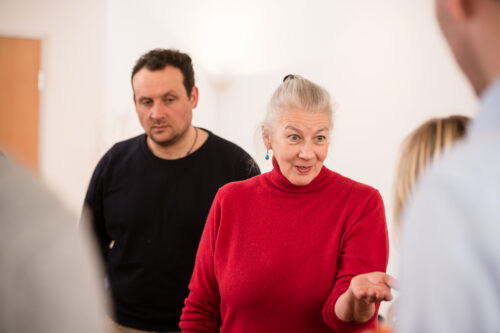
This Communication Skills Course is limited to 8 delegates ensuring personal attention to everyone on the course.
2 quality trainers per group means a total focus on you.

Communication Skills Course
DAY ONE:
Understand how effective communication works and build your confidence
- Dynamics of Communication
- Tone of Voice
- Words, Words, Words
- Body Language
- History
- Head Stuff
- Environment
- Geography
- Remote Communication
- Communication Cycle
- Timing
Two Day Open Course
Find out what gets in the way of you being an effective communicator on our two-day communication skills training course.
You will learn a range of tools and communication techniques to help you improve your skills and boost your professional development.
This effective communication skills training course is for anyone who is required to demonstrate a good level of communication skills in their day-to-day work, from managing to public relations.
It’s a practical, fun-filled two days, packed with exercises, games, discussion, a range of techniques, and lots of practice.

Course Benefits
This Communication Skills Course is limited to 8 delegates ensuring personal attention to everyone on the course.
2 quality trainers per group means a total focus on you.
Communication Skills Course – Two Day
DAY ONE:
Where communication can go wrong
- How Communication Works
- Your Default Style
- Voice and Words
- Body Language
- The Background Story
- Assumptions
- Eye Contact
- The Environment
- Remote Communication
DAY TWO:
Putting it all into practise
- Miscommunication is the Norm
- Timing
- Difficult Situations
- Handling Difficult Styles
- Working to Strengths
- Practise, Practise, Practise
- Review of What Works
- Plan of Action
Dynamics of Communication
What affects people?
How to be more in charge of situations
Tone of Voice
Identify default style
How your style affects how you are perceived
Words, Words, Words
Deliberately mangle your message
Bury the meaning
Recognise clear communication
Body Language
Power of active listening
Body language and attitude
History
Knowing your own and others’ histories
The impact of how things are heard and seen
Head Stuff
Thoughts that support or hinder communication
Why does this happen?
Environment
How environment changes communication
Conversations around the water cooler, remotely, or in the workplace.
Geography
Where you speak as important as when
Using ‘geography’ effectively
Remote Communication
Challenges in communication when communicating online
How to improve remote communication
Communication Cycle
Keep people in the communication cycle.
Timing
Timing makes a difference
Best and worst times for you
Best and worst times for others
How Communication Works
Take charge of communication
Where communication can go wrong
Your Default
Identify default style
How are you perceived?
The Voice
Variations of tone
How to change the tone of your voice
Choosing the right tone for each situation
The Words
Deliberately mangle your message
Bury the meaning
Failsafe way to deliver a clear key message
The Background Story
History with particular sorts of people, subjects and scenarios
Small changes to words, tone and body language
Overcoming cultural barriers
Assumptions
How assumptions impact communication
The Environment
What makes a good environment?
What makes a bad environment?
How it impacts on communication
Remote Communication
Challenges in communication when communicating online
Making it lively and engaging
Where Are We?
Effect of being on your territory or ‘theirs’
Be deliberate in intentions
How Does It Work?
Visualise how you believe communication works…and doesn’t!
Timing
Timing makes a difference
Best and worst times for you
Best and worst times for others
Difficult Situations
When things don’t work out
Feelings which can get in the way
How to communicate despite the discomfort








Thank you for a very enjoyable day. In particular, using the different types of questions correctly has made finding out what our clients require much easier.
I thought this course was absolutely brilliant and really worthwhile for anyone. I would definitely recommend it.
I really enjoyed the course. The venue and surroundings are great, so much better than a dingy ex-council building in Holborn like the norm. Maria and Paul did a fab job delivering useful and engaging content.